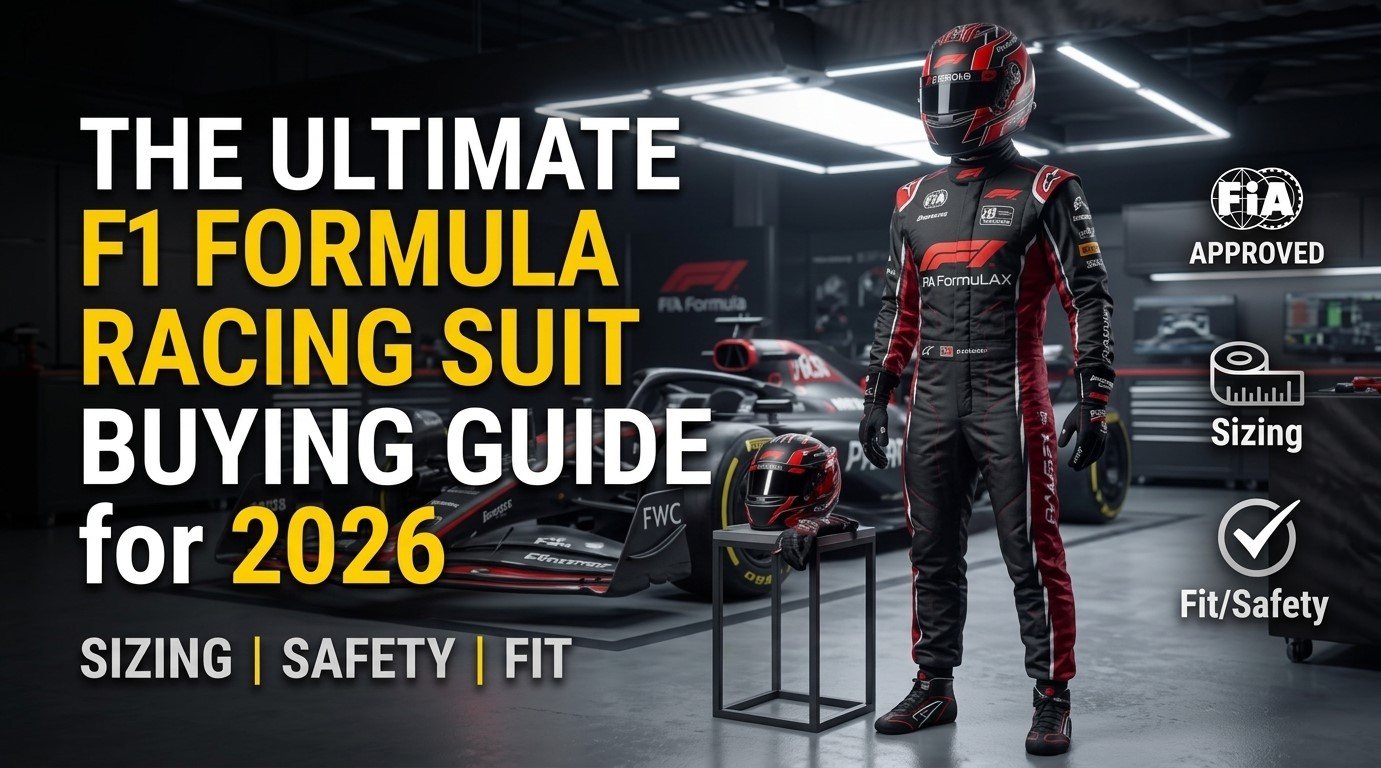
The Ultimate F1 Formula Racing Suit Buying Guide for 2026: Sizing, Safety & Fit
The Ultimate F1 Formula Racing Suit Buying Guide for 2026: Sizing, Safety & Fit
When you pull onto the starting grid, step on the throttle, and feel the raw power of a high-performance race car, split-second decisions dictate your success. In motorsport, every millisecond counts—and so does every layer of your protective gear. Whether you are attacking apexes on a weekend track day, rising through amateur karting leagues, or building out a professional racing setup, your suit is your first line of defense and your primary identity on the tarmac.
Choosing the right F1 Formula Racing Suit is not just about looking like a Grand Prix driver; it is an essential investment in safety, thermal protection, ergonomic movement, and personal branding.
Welcome to The Ultimate F1 Formula Racing Suit Buying Guide for 2026: Sizing, Safety & Fit. Below, we break down everything you need to know about material technology, homologation standards, custom tailored liveries, and how to select the perfect race suit for your specific discipline.
What Makes a True F1 Formula Racing Suit?
Modern motorsport apparel has evolved far beyond basic heavy coveralls. Today’s racing suits represent the pinnacle of textile engineering, balancing uncompromising fire protection with ultra-lightweight breathability.
Advanced Material Composition: Nomex® and Beyond
At the core of every high-tier F1-style suit is Nomex®—an aramid fiber developed by DuPont with inherent fire-resistant properties. Unlike flame-retardant coatings that wash out over time, Nomex carbonized fibers swell and thicken when exposed to extreme heat, creating a protective thermal barrier between the flame and your skin.
- Multi-Layer Construction: 2-layer or 3-layer Nomex configurations that maximize heat insulation without adding unnecessary bulk.
- Breathable Inner Linings: Moisture-wicking technical fabrics designed to draw sweat away from the body during long, grueling stints under intense cockpit heat.
Ergonomics and Cockpit Comfort
When pulling multiple Gs through a tight chicane, suit restriction is the last thing you want to worry about. High-end race suits incorporate:
- Fully Floating Sleeves: Elasticated gusset panels around the shoulders allowing 360-degree arm movement for effortless steering input.
- Pre-Curved Arms and Legs: Tailored geometry that naturally aligns with the seated driving position, preventing material bunching around the waist and knees.
- Stretch Panels: Lumbar and groin stretch zones that adjust seamlessly to your body shape as you move.
Safety Standards Demanded on the Track
When high speeds are involved, safety certification is non-negotiable. Track officials and sanctioning bodies require specific ratings before allowing drivers through technical inspection.
FIA 8856-2018: The Gold Standard
The current standard for professional racing suits is FIA 8856-2018. Introduced to elevate safety benchmarks past older ratings, this certification requires suits to withstand direct flame contact for at least 12 seconds without transferring critical heat to the interior.
- Flame Resistance: Protection against heat transmission and direct burn risks.
- Stitch & Seam Strength: High-tensile thread that prevents seams from bursting under extreme stress or mechanical friction during an accident.
- Extraction Handles: Heavy-duty shoulder straps engineered to withstand over 300 Newton forces, allowing safety crews to lift a driver cleanly out of the cockpit in an emergency.
Ready to Upgrade Your Track Gear?
Explore custom fit options, bespoke liveries, and premium race-spec suits engineered for speed and protection.
Customization vs. Off-the-Shelf: Why Fit and Livery Matter
While standard off-the-shelf suits offer decent entry-level protection, custom suits elevate both performance and professional presentation.
The Pitfalls of Poor Fit
An ill-fitting suit isn’t just uncomfortable—it is a safety hazard.
- Too Loose: Excess material can catch on cockpit switches, fold uncomfortably under harness straps, or create heat traps during a thermal event.
- Too Tight: Restricted movement leads to rapid driver fatigue, while stretched fabric loses structural thermal efficiency.
Custom Sizing and Tailoring
Opting for a custom-tailored suit ensures precise measurements across your chest, waist, inseam, and torso length. A suit built specifically for your body structure offers complete freedom of movement and eliminates harness pinch points.
Bespoke Livery and Personal Branding
Your suit is your canvas. Whether you want to mirror your favorite Grand Prix team’s iconic aesthetic or build a completely personalized identity with custom colors, sponsor logos, and embroidered driver names, tailored options let you stand out on the track. Discover custom sizing options and personalized designs over at Formula Racing Suit.
Buyer’s Checklist: Match Your Suit to Your Discipline
Not every track day requires a full FIA 8856-2018 suit, and using the wrong suit for your discipline can compromise safety or waste money.
| Racing Discipline | Key Requirements | Recommended Suit Type |
|---|---|---|
| Karting (Indoor/Outdoor) | Abrasion resistance, high durability, impact padding | CIK-FIA Level 2 (Non-Nomex Cordura/Polyester) |
| Track Days & HPDE | Basic flame resistance, comfort, breathability | SFI 3.2A/1 or Entry-Level FIA 8856-2018 |
| Sim Racing Upgrades | Breathability, lightweight feel, aesthetics | Lightweight Karting or Replica Suit |
| Professional / Wheel-to-Wheel | Maximum fire safety, strict compliance, lightweight Nomex | FIA 8856-2018 Multi-Layer Suit |
1. Karting Drivers
Karting suits focus heavily on abrasion resistance rather than fire protection. Because kart drivers risk ejection on asphalt, fabrics like high-density Cordura® are used to protect against road rash. Note: Never wear a karting suit in a car where fire risk is present.
2. Track-Day Enthusiasts & Amateur Racers
If you participate in High-Performance Driver Education (HPDE) or local time-attack events, look for an entry-level SFI or FIA-certified suit. Prioritize lightweight Nomex construction so you stay cool over long sessions.
3. Sim Racers Transitioning to the Track
Sim racers building out immersion often start with replica or karting suits, but when moving to real wheel-to-wheel racing, prioritize certified protective gear that meets your local sanctioning body’s rulebook.
Care & Maintenance: Maximize Suit Lifespan
A premium race suit is a major investment. Proper care ensures its protective properties and vibrant appearance last season after season.
- Washing Instructions: Wash your suit inside out on a delicate cycle using cold water. Use a mild liquid detergent free of bleach, fabric softeners, or harsh chemicals that can break down Nomex fibers.
- Drying: Air dry your suit on a wide, padded hanger away from direct sunlight. Never use a tumble dryer, as high heat can damage elastic stretch zones and stitching.
- Storage: Store your suit in a breathable garment bag in a cool, dry place. Avoid leaving it crumpled in a damp track bag where mildew and odor can develop.
Gear Up for the Grid Today
Your gear is an extension of your driving capability. From local track days to competitive championships, having a suit that balances FIA safety certification, thermal insulation, and an uncompromised custom fit lets you focus purely on hitting your marks.
Ready to step up your setup? Browse premium race apparel, custom color schemes, and precision sizing options directly at FormulaRacingSuit.com and order your custom-built race gear today!
Frequently Asked Questions (FAQ)
Are F1 race suits 100% fireproof?
No suit is entirely “fireproof” infinitely. F1 suits are made of flame-retardant materials like Nomex that withstand extreme heat and direct flame for a specific duration (typically 12 to 15+ seconds under FIA 8856-2018 standards) without burning, giving drivers crucial time to evacuate a vehicle safely.
What is the difference between a karting suit and a Formula racing suit?
Karting suits are designed primarily for abrasion resistance to protect drivers against friction if ejected from a kart; they are generally not flame-retardant. Formula racing suits are made from Nomex and engineered specifically for fire protection and heat resistance inside an enclosed or open-wheel car cockpit.
How long does a custom race suit take to produce?
Custom suit production timelines generally range from 2 to 6 weeks, depending on the complexity of the custom tailoring, embroidery choices, and graphic livery design work.
How do I know what size race suit to order?
Measure yourself wearing the baseline layers you plan to drive in (such as fireproof underwear). Key measurements include chest, waist, hips, inseam, and torso length. For maximum comfort and mobility, opt for custom-tailored sizing.

Add comment